
Your body isn't broken.
Perimenopause is just confusing.
Perimenopause can be hard. Understanding what your body needs shouldn't be.
What feels hardest right now?
If some or all of these statements feel like you, you are not alone and you are not imaging this.
Perimenopause can make you feel like you've lost the instruction manual for your own body.
One minute you're coping. Then suddenly you're exhausted, waking at 3am, forgetting why you walked into a room, gaining weight despite doing what you've always done, feeling anxious or overwhelmed, and wondering what happened to the woman who used to have this figured out.
And the really frustrating part is the things that used to work don't always work the same way anymore.
It's not because you've lost your discipline. And it doesn't mean your body is broken.
Your hormones are changing and those changes can ripple through your sleep, energy, mood, appetite, metabolism, relationships, confidence, stress response, and so much more. When your hormones impact one part of your life, this impacts the other parts of you too. And this combines with a time in life where stress is high, caring commitments are complicated, responsibilities feel overwhelming and you suddenly look up and think 'where did my life go'.
That's why I don't believe in chasing symptoms.
I take a holistic approach to health. How you feel physically and emotionally is interconnected. When we support your foundations, you can start to feel more in control of your body and your life again.
When you UNDERSTAND you can make sense of what's happening in your body, so you're not constantly wondering "Is this normal?"
When you NOURISH and eat in a way that supports steadier energy, better satiety and a body that's changing, you stop punishing yourself for changing.
When you MOVE to build strength, protect your bones and metabolism, you feel capable in your body again.
When you SLEEP you give your body the recovery it needs so you're not trying to function every day on an empty tank.
When you REGULATE you support your nervous system and reduce the feeling that you're constantly running on stress, overwhelm and adrenaline.
If you are ready to stop surviving and start thriving, come and join in.

Supporting women through the physical and emotional experience of perimenopause.
Discover which areas are having the biggest impact on your symptoms and get your personalised starting point.
Hi, I'm Louise
From the outside everything was picture perfect. On the inside, things were very different. I'm here to share my story if it helps even just one woman. As a women’s health coach dedicated to helping midlife women feel energised, balanced, and confident again, my work is a compassionate, science-backed approach to support women through this transition.
I help women understand what’s really happening in their bodies, manage stress effectively, and make simple life style shifts that restore energy and calm. My mission is to help you feel like yourself again — vibrant, clear, and in control.

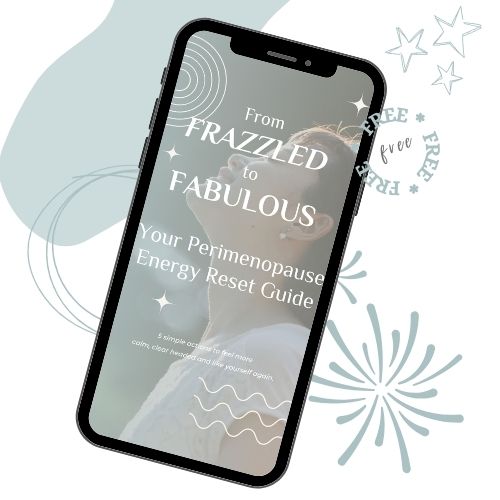
FREE
From Frazzled to Fabulous
Your perimenopause energy reset guide. In this guide you'll find 5 daily habits to unlock abundant energy. Nutrition, movement, stress reduction and sleep are all important pieces of the energy puzzle. Ditch the brain fog, energy crashes, mood swings, anxiety, insomnia and much more. It's time to feel fabulous!
Read the blog
Your weekly dose of information, inspiration and practical know-how to transform your life. Nothing is off limits here - nutrition, movement, stress, sleep, intimacy, connection, boundaries. We talk symptoms, science and how you can manage your perimenopause symptoms.
View my services
I am passionate about the role nutrition plays in our physical and mental health and wellbeing. Check out the ways we can work together to help you get back on track and live with more ease.
Connect with me on socials
Where do you like to hang out online? Come and follow me on your favourite platform for inspiration, information and entertainment.
NEW ON THE BLOG...
Ready to build the life of your dreams?
Let's chat
Ready to work with a coach to uplevel your life and business?
Listen to the
Podcast
view my
services
read the
BLOG
Let's chat
Ready to work with a coach to uplevel your life and business?


Let's learn
Learn at your own pace and make quantum leaps.

Why Perimenopause Can Change the Way You Feel About Your Body

7 Signs You Might Be Ready To Consider HRT During Perimenopause

Intimacy During Midlife: Why Your Relationship and Sex Life Can Feel Different
YOU DESERVE TO THRIVE DARLING
Student Love Notes
We've helped so many incredible students to find success as Virtual Assistants...

The VA Business Blueprint helped me to go from feeling completely stuck to starting my business and getting my first client!
Ellen, business name

I enrolled in the VA Services Academy feeling completely lost - within 2 weeks I knew exactly what to offer & what to charge.
Ellen, business name

Beginner to Booked Out was a game-changer for me. Anna and her team are incredible and I'm booked out for the next 3 months!
Ellen, business name
New on the blog...
Perimenopause and Sleep: Why You Can't Stay Asleep
Perimenopause and Sleep: Why You Can't Stay Asleep
Waking during the night is one of the most frustrating symptoms of perimenopause. Find out why your sleep can become lighter and more disrupted, what may be contributing, and what you can do to sleep more consistently.
You get into bed exhausted.
You fall asleep reasonably easily.
And then, sometime during the night, you're awake.
You roll over.
Check the clock.
Try not to think about it.
Maybe you fall back asleep.
Maybe you don't.
Then it happens again.
And again.
By morning, you're exhausted, irritable and wondering how you're supposed to function when you feel like you've barely slept.
Perhaps you've started saying:
“I just can't stay asleep anymore.”
If that's you, you're not imagining it.
Sleep can become more disrupted during perimenopause, and for some women, staying asleep becomes much harder than falling asleep in the first place.
But here's the important part:
You don't have to simply accept poor sleep as part of getting older.
There are several things that can contribute to disrupted sleep during perimenopause, and understanding what's happening is the first step towards improving it.
Why can't I stay asleep during perimenopause?
There isn't one single reason.
Sleep during perimenopause can be affected by a combination of hormonal changes, temperature regulation, stress, mood, changes in sleep patterns, lifestyle factors and other health conditions.
And sometimes it isn't even the thing that wakes you up that's the whole problem.
It's what happens afterwards.
You wake.
Your brain switches on.
You notice the time.
You start worrying about tomorrow.
I'm going to be exhausted.
I've got so much to do.
Why am I awake again?
And suddenly, what started as a brief awakening has become an hour of staring at the ceiling.
This is why I don't want you to think about sleep as simply:
“How do I stop waking up?”
A better question is:
“What's disrupting my sleep, and what happens when I wake?”
Why does perimenopause affect sleep?
Hormonal changes are one piece of the puzzle.
During perimenopause, oestrogen and progesterone fluctuate rather than declining in a smooth, predictable way.
These hormonal changes can affect a number of processes involved in sleep and wellbeing.
At the same time, other symptoms of perimenopause can interfere with sleep.
You might experience:
night sweats or feeling unusually hot
anxiety or a racing mind
changes in mood
increased stress
headaches
aches and pains
changes in your menstrual cycle
needing to urinate more frequently
disrupted breathing or snoring
changes in your usual sleep pattern
And then there is life itself.
You may be working, raising teenagers, caring for ageing parents, managing a household and trying to maintain a relationship — all while navigating a body that suddenly seems to have changed the rules.
No wonder sleep can become harder.
Is waking during the night normal in perimenopause?
Brief awakenings during the night are actually normal.
We all move through different stages of sleep and may briefly wake between sleep cycles without remembering it.
The problem is when those awakenings become frequent, prolonged or distressing, and you aren't getting enough restorative sleep overall.
This is an important distinction.
You don't necessarily need to sleep for eight uninterrupted hours to have healthy sleep.
But if you're regularly awake for long periods, waking repeatedly, or feeling exhausted despite spending enough time in bed, it's worth looking at what's happening.
What about waking at 3am?
If your particular problem is waking at roughly the same time every night — especially around 3am — I've written a whole article about this.
Read next: Why You're Waking Up at 3am in Perimenopause
And I want to clear up one piece of misinformation here.
You may have heard that waking at 3am means your cortisol is spiking because your blood sugar has crashed, or that your liver is “detoxing”.
That's far too simplistic.
There are many reasons you might wake during the night, and there's no good evidence that a universal “3am cortisol spike” or liver detox process explains why women wake at that particular time.
Your sleep deserves a better explanation than that.
Can hormonal changes cause night sweats?
They can.
Changes in reproductive hormones during perimenopause can affect the body's temperature regulation.
This can contribute to hot flushes and night sweats, which can wake you during the night.
And even if you don't wake up completely drenched in sweat, feeling unusually hot or uncomfortable can fragment your sleep.
You may find yourself throwing the quilt or blankets off.
Opening the window.
Changing your clothes.
Turning the pillow over.
Then trying to fall asleep again.
If this happens repeatedly, the cumulative effect can be significant.
And if night sweats are regularly disrupting your sleep, it's worth discussing your symptoms with your GP, particularly if they're severe or affecting your quality of life.
Why am I waking up feeling anxious?
This one can be particularly confusing.
You might wake up feeling completely fine one night and suddenly find your mind racing the next.
Hormonal changes can be associated with changes in mood and anxiety during perimenopause, but anxiety isn't caused by hormones alone.
Stress, life circumstances, sleep deprivation and your previous mental health can all contribute.
And there's a frustrating feedback loop that can develop:
Poor sleep → less emotional resilience → more stress → harder to switch off → poorer sleep.
This is why sleep and stress need to be considered together.
If you're carrying a huge mental load during the day, your brain doesn't necessarily switch off just because your head hits the pillow.
The mental load doesn't disappear at bedtime
Imagine your day.
Work.
Emails.
Children.
Dinner.
School activities.
Your partner.
Your parents.
Bills.
Appointments.
The thing you forgot to do.
The thing you need to remember tomorrow.
You finally get into bed.
And suddenly there is silence.
That's when your brain decides it's time to review the entire day.
Did I send that email?
What am I going to do about Mum?
I need to book that appointment.
What am I going to make for dinner tomorrow?
Why did I say that in the meeting?
Sound familiar?
This is one reason I think we need to stop treating sleep as an isolated problem.
Your sleep is connected to the rest of your life.
I've written more about this in:
Why You Don't Feel Like Yourself During Perimenopause: The Mental Load of Midlife Women
What you eat during the day can affect your sleep
Let's talk about food without turning this into another list of foods you're “allowed” and “not allowed” to eat.
There is no magical perimenopause bedtime snack that guarantees eight hours of uninterrupted sleep.
And I don't want you becoming afraid of carbohydrates or believing that eating after a particular time will automatically cause poor sleep.
Instead, think about your overall pattern of eating.
Are you eating enough during the day?
Are your meals reasonably balanced?
Are you getting enough protein and fibre?
Are you relying on caffeine to get through the afternoon because you're already exhausted?
Are you drinking alcohol regularly to help you relax in the evening?
Are you going to bed absolutely starving?
Or completely stuffed?
These patterns can matter more than one “perfect” food.
If you want to understand how I approach nutrition during perimenopause, start here:
What to Eat During Perimenopause
My philosophy is simple:
Crowd in the foods your body needs rather than creating a long list of foods you're not allowed to eat.
What about alcohol and sleep?
This is one area where it's worth being honest.
A glass of wine may make you feel sleepy initially.
But alcohol can disrupt sleep later in the night and reduce sleep quality.
You may fall asleep quickly but wake more frequently or sleep less deeply.
And if you're already struggling with fragmented sleep, alcohol may be making the problem worse.
You don't have to make this an all-or-nothing decision.
Try paying attention.
What happens to your sleep on the nights you drink compared with the nights you don't?
Your own sleep diary can tell you a lot.
What about caffeine?
Caffeine has a relatively long half-life, which means it can remain in your system for hours after you drink it.
Some people are much more sensitive to caffeine than others.
If you're struggling to stay asleep, experiment with moving your caffeine earlier in the day rather than immediately assuming you need to give it up altogether.
And remember that caffeine isn't only coffee.
It can also come from tea, energy drinks, cola, chocolate and some supplements or medications.
Again, this is about experimenting rather than creating another set of rules you feel you have to follow perfectly.
Should I exercise if I'm exhausted?
Yes. But more isn't necessarily better.
Regular physical activity is associated with better sleep, and exercise is an important part of supporting health during perimenopause.
But if you're already exhausted, adding intense workouts every day may not be the answer.
This is where strength training becomes particularly useful.
You don't need to exercise purely to burn calories.
Building and maintaining muscle supports strength, physical function, metabolic health and healthy ageing.
Read next: Why You Need to Get Stronger During Perimenopause, Not Just Exercise More
And movement doesn't have to mean a punishing workout.
Walking counts.
Strength training counts.
Mobility work counts.
Getting outside counts.
The goal is to build a body that can support your life — not exhaust it further.
What should I do when I wake up in the middle of the night?
This is where I want to challenge one of the most common sleep habits.
Stop checking the clock.
If you wake at 2:47am and immediately start calculating:
“I've got four hours and thirteen minutes left…”
you've just given your brain something to worry about.
Try to keep the room dark and resist the urge to monitor the time.
If you're comfortable and reasonably relaxed, give yourself permission simply to rest.
You don't have to make sleep happen.
If you're becoming increasingly frustrated or wide awake, get out of bed for a short period and do something quiet in low light until you feel sleepy again.
The aim is to avoid turning your bed into the place where you lie awake worrying about sleep.
What if I wake up with my mind racing?
Don't try to solve your entire life at 3am.
This is not the time to work out your five-year career plan, analyse your relationship or decide that you're going to completely overhaul your diet.
Your 3am brain is not necessarily your most reliable decision-making brain.
Instead, if thoughts are looping, keep a notebook beside your bed.
Write down the thought.
“Call Mum tomorrow.”
“Email Sarah.”
“Book appointment.”
Then tell yourself:
I've captured it. I don't need to solve it right now.
This sounds incredibly simple.
Sometimes simple is exactly what you need.
When should I get help with my sleep?
This is important.
Don't assume that every sleep problem is simply “perimenopause”.
If you're persistently struggling with sleep, it's worth talking to your GP or another appropriate health professional.
In particular, seek assessment if you:
regularly struggle to fall or stay asleep
feel excessively sleepy during the day
snore loudly
wake gasping or choking
experience significant restless legs
have persistent mood changes or anxiety
have severe or persistent night sweats
are experiencing symptoms that are significantly affecting your ability to function
Sleep apnoea, restless legs syndrome, thyroid problems, medication effects, mental health conditions and other health issues can all affect sleep.
Perimenopause may be part of the picture without being the whole picture.
You don't need perfect sleep
I think this is something women need to hear.
You will probably have nights when you sleep badly.
That's normal.
A stressful day.
A sick child.
A late night.
Travel.
Alcohol.
A hot night.
A busy mind.
Your menstrual cycle.
Life happens.
The goal isn't to create a life where you never wake during the night.
The goal is to create the conditions that support good sleep most of the time — and to stop turning an occasional bad night into a crisis.
Because sometimes the fear of not sleeping becomes part of the sleep problem.
Start with one thing tonight
Don't try to implement a 15-step sleep routine.
Choose one thing.
Maybe it's moving your caffeine earlier.
Maybe it's reducing alcohol.
Maybe it's getting outside and moving during the day.
Maybe it's making your bedroom cooler.
Maybe it's putting your phone away before bed.
Maybe it's writing down tomorrow's to-do list before you get into bed.
Maybe it's finally talking to your GP about the symptoms you've been putting up with.
And if you're waking at 3am every night, start there.
Read: Why You're Waking Up at 3am in Perimenopause
Small changes are easier to sustain than a complete lifestyle overhaul.
And your sleep doesn't need another thing to fail at.
Your sleep is part of the bigger picture
This is the part I really want you to take away.
If you're exhausted, don't automatically assume you need more motivation.
If you're gaining weight, don't automatically assume you need to eat less.
If you're waking at night, don't automatically assume you need a new supplement.
And if you don't feel like yourself anymore, don't assume you've somehow become lazy or lost your way.
Your body is going through a transition.
And your sleep sits right in the middle of the bigger picture.
Nutrition affects energy.
Movement supports strength and metabolic health.
Stress affects sleep.
Sleep affects mood, appetite, energy and resilience.
And all of those things influence how you feel in your body and how you experience your life.
That's why I don't believe in fixing perimenopause symptom by symptom.
We need to look at the woman as a whole.
Where should you start?
If your sleep is all over the place, you might think sleep is the only thing you need to fix.
But sometimes the biggest opportunity is somewhere else.
Maybe you're not eating enough.
Maybe you're under-recovered.
Maybe you're carrying an enormous mental load.
Maybe you're not moving in a way that supports your body.
Or maybe sleep really is the place to start.
The Perimenopause Snapshot Quiz helps you look across the five foundations — energy, nutrition, movement, sleep and stress — so you can identify where you may need the most support right now.
Take the free Perimenopause Snapshot Quiz
Stop trying to fix everything at once. Find your starting point.
Frequently Asked Questions
Why can't I stay asleep during perimenopause?
Perimenopause can affect sleep through hormonal fluctuations, night sweats, changes in mood, stress and other symptoms. Lifestyle factors and sleep disorders can also contribute, so persistent sleep disruption shouldn't automatically be attributed to hormones alone.
Why do I keep waking up during the night?
Brief awakenings are normal, but frequent or prolonged waking can be influenced by temperature changes, stress, anxiety, alcohol, caffeine, physical discomfort, hormonal changes and sleep disorders. Identifying what happens before and after you wake can help uncover patterns.
Is waking at 3am a sign of perimenopause?
Waking at 3am can occur during perimenopause, but it isn't a specific diagnostic sign. Sleep becomes more fragmented for some women during the menopause transition, and there can be many reasons for waking at a particular time.
How can I sleep better during perimenopause?
Start with the fundamentals: maintain a consistent sleep schedule, get daylight and movement during the day, review caffeine and alcohol, create a comfortable sleep environment and develop a wind-down routine. If symptoms persist, speak with a qualified health professional to explore potential causes and treatment options.
Can perimenopause cause insomnia?
Perimenopause can be associated with insomnia and other sleep difficulties. Hormonal changes, hot flushes, night sweats, anxiety, mood changes and other symptoms can all contribute to difficulty falling or staying asleep.
Can stress cause me to wake up during the night?
Stress can make it harder to fall asleep and may contribute to waking during the night. If your mind becomes active when you wake, the combination of stress and worrying about not sleeping can make it harder to return to sleep.
Does what I eat affect sleep during perimenopause?
Overall dietary patterns can influence health and sleep, while caffeine and alcohol can be particularly relevant for some people. There isn't one specific “perimenopause sleep diet” or food that guarantees better sleep. A balanced eating pattern, adequate nutrition and paying attention to your individual triggers are more useful approaches.
Does exercise help sleep during perimenopause?
Regular physical activity is associated with better sleep and has many other health benefits during midlife. A combination of aerobic activity, strength training and general daily movement can be beneficial. However, if you're exhausted, more intense exercise isn't necessarily better.
Should I take a supplement for perimenopause sleep?
Not automatically. Supplements aren't a substitute for identifying why your sleep is disrupted, and evidence varies considerably between products. If you're considering a supplement, discuss it with your GP, pharmacist or another qualified health professional, particularly if you take medications.
When should I see a doctor about my sleep?
Speak with your GP if sleep problems are persistent, significantly affecting your daytime functioning, or accompanied by symptoms such as loud snoring, gasping during sleep, severe daytime sleepiness, significant mood changes or other concerning symptoms. Sleep disorders and other health conditions can occur during perimenopause and may need specific treatment.
About Louise
Louise is a nutritionist specialising in women’s nutrition and lifestyle during perimenopause and midlife. Through her programmes, she helps women understand the changes happening in their bodies and build practical nutrition and lifestyle strategies to feel more energised, rested and confident through this stage of life.
Last updated: August 2026