The First 7 Signs of Perimenopause Most Women Miss
Why you don’t feel like yourself — and what your body is trying to tell you
You might have noticed changes creeping in — the kind that don’t quite make sense at first. One month your period’s early, the next it’s late. You wake up at 3am for no reason. Your patience has gone on permanent holiday, and you’re more reactive, more forgetful and perhaps a little more easily overwhelmed by things that never used to phase you.
It's not dramatic and it's not a crisis. It's much quieter than that. It's just a sense that things are shifting. You're still functioning, still showing up for everyone, and still holding everything together. But something is a bit off.
This is often where perimenopause begins. Not with hot flashes, but with subtle, easy-to-dismiss shifts that most women (and many healthcare providers) don’t immediately recognise.
Let’s talk about the first 7 signs of perimenopause that are commonly missed — so you can understand what’s happening in your body, and more importantly, what actually helps.
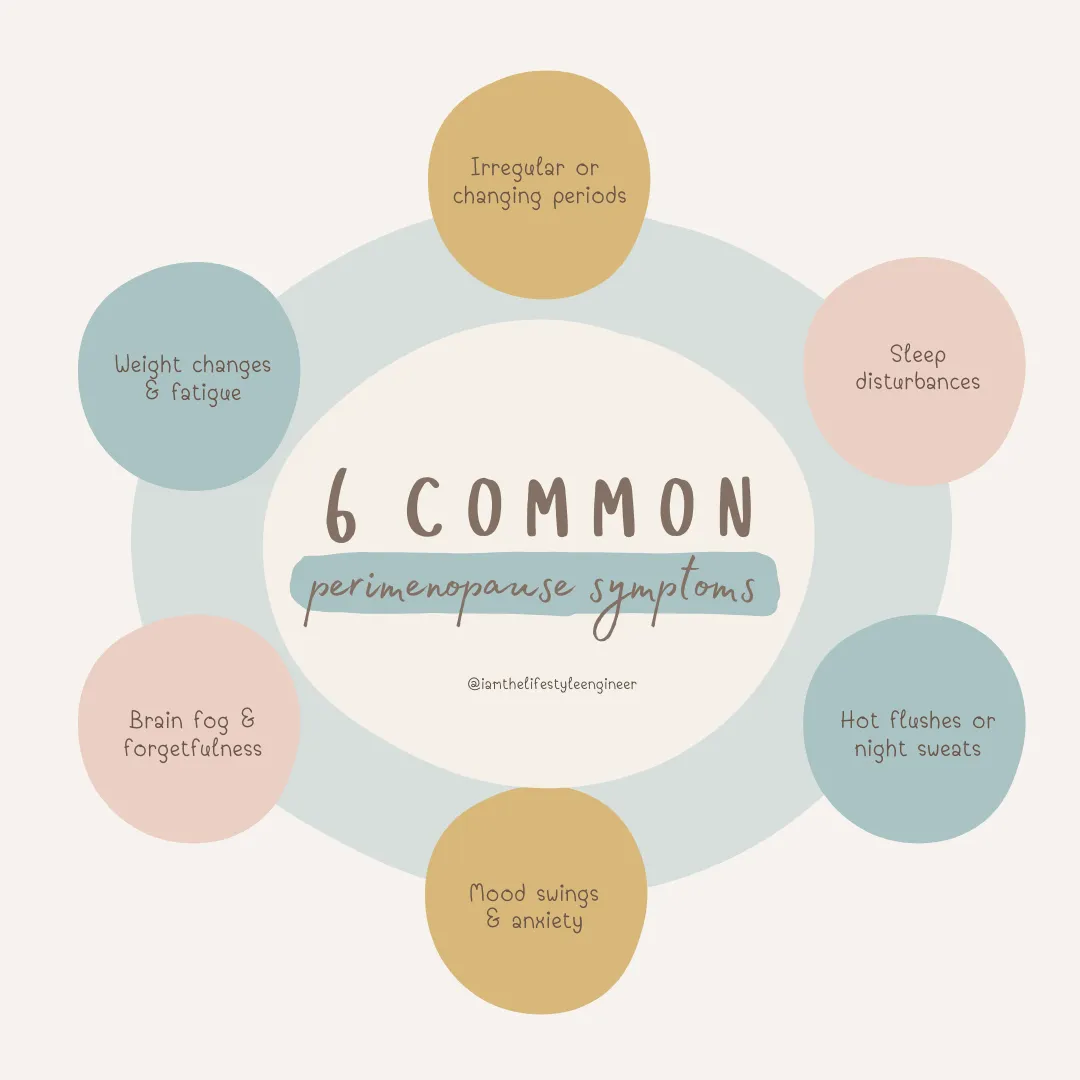
1. Heavier or More Unpredictable Periods
One of the earliest and most obvious symptoms is a shift in your menstrual cycle. Periods may become shorter or longer, heavier or lighter (or all of these from month to month). You might skip a month, then have two cycles close together. Some people put it down to stress but if you're in your 40's, it's quite possibly the beginning of perimenopause.
These changes happen because ovulation becomes less consistent as oestrogen and progesterone levels fluctuate. It’s not unusual for cycles to vary dramatically in the years before menopause.
Things you can do to help include eating more iron-rich foods (especially if bleeding is heavier), tracking your cycle (knowledge helps to reduce anxiety), supporting a healthy liver by eating plenty of fibre, fresh fruits and vegetables and engaging in regular moderate exercise.
👉 When to seek support: If your bleeding is extremely heavy, prolonged, or associated with pain, it’s worth checking in with your GP to rule out other causes such as fibroids or thyroid changes.
2. Sleep Disturbances
Whether you are waking at 3am and feeling wide awake, having difficulty falling asleep, or waking in the morning feeling like you haven't slept at all, you’re not alone. Many women notice their sleep becomes lighter, more fragmented, or just plain elusive during perimenopause.
Hormonal fluctuations such as a drop in progesterone (a calming hormone) and fluctuating oestrogen levels affect melatonin production, body temperature regulation, and cortisol rhythms which are all essential for deep, restorative sleep.
Small habits such as sleeping in a cool room, limiting alcohol, and winding down without screens can make a surprisingly big difference to the quality and quantity of sleep you can get. It is also important to eat enough protein during the day. Under eating causes poor sleep as we wake hungry rather than having enough fuel to feed our bodies overnight. Magnesium-rich foods such as leafy greens, nuts, and seeds can help relax our muscles making it easier to fall asleep.
3. New or Unfamiliar Mood Swings and Anxiety
Your nervous system is often one of the first parts of your body to notice the changes in your hormones.
Hormonal changes affect neurotransmitters like serotonin, dopamine, and GABA, which influence mood and calm. Combine that with poor sleep, life stress, and midlife pressures and it’s no wonder many women feel irritable, anxious, or flat. Even if you've never been anxious before, you might notice that your mind feels busier or perhaps you are overthinking or have a low level sense of unease.
If you’ve noticed you’re less tolerant, more tearful, or just not feeling “like yourself,” this isn't a permanent personality change, it’s a symptom of the biological changes that are occurring. With the right support, your emotional balance can return.
It may help to prioritise blood sugar stability by eating protein rich meals, especially at breakfast, reducing caffeine intake and gently supporting your nervous system with walks, time outdoors and breath work. Movement, connection, and balanced nutrition including Omega 3 fatty acids and magnesium rich foods, all help stabilise mood. Now might be a good time to look at your capacity and whether you are happy to continue to be stretched a bit thin. Your health matters and taking time to rest and recover becomes increasingly important during this time in our lives.
4. Brain Fog and Forgetfulness That Makes You Doubt Yourself
Losing your train of thought mid-sentence? Forgetting words you’ve known forever? Walking into a room and forgetting why you are there? This is one of the most frustrating symptoms, and may have you questioning your capability.
This is one of the most distressing and misunderstood symptoms of perimenopause. Fluctuating oestrogen impacts blood flow to the brain and neurotransmitter activity, diminishing cognitive function, memory and focus. As levels fluctuate, your brain literally processes information differently.
The good news is that this fog isn’t permanent. Supporting your sleep and sound nutrition (especially protein, omega-3s and B vitamins) can all help. Strength training also supports brain health and reducing stress and cognitive overload can dramatically improve clarity and concentration.
5. Sudden and Unexplainable Fatigue
This isn’t the type of fatigue that feels like "I just need a good night’s sleep.” It’s a deeper and heavier fatigue that doesn’t fully resolve with rest. This is a compounding effect of hormonal shifts, poor sleep, blood sugar instability and an increase in stress load that leaves you waking tired, hitting a wall mid-afternoon and relying on caffeine just to get through.
To help stabilise blood sugar and avoid that 3pm crash, prioritise protein, aiming for 25-30g per meal. It is also important to ensure you are eating enough. Many women are unintentionally under-fuelling and this can lead to a lack of energy. Strength training helps to support energy and metabolism so incorporate weights into your routine and if fatigue is persistent with these changes, consider a blood test to rule out iron or B12 deficiency and to check thyroid health. B12 is often low for women who do not eat a lot of animal protein. It is not found in plant foods so consider supplementing if you are not getting enough in your diet.
6. Weight Changes Even When You Haven't Changed How You Eat or Move
Even if you haven’t changed your eating habits, you might notice weight gain, particularly around the middle. This is due to shifts in oestrogen, insulin sensitivity, and muscle mass as well as an increase in cortisol which promotes the storage of fat around our bellies.
It’s not about dieting harder, it’s about supporting your metabolism differently: focusing on protein, strength training, and recovery. When your hormones are shifting, your body needs nourishment, not restriction.
7. The Hardest One to Explain: “I Don’t Feel Like Myself”
This is the one women struggle to articulate. You’re still you… but not quite. Perhaps you feel less energise, less motivated, and less connected to yourself. I describe it that I lost my mojo. And maybe the worst part is that often, no one else notices, which leaves you feeling invisible.
Perimenopause is a full-body transition and sometimes can feel like a storm. It's neurological, hormonal, emotional, and physical and can be unpredictable and confusing and sometimes it can feel incredibly isolating. But it can also be a powerful phase of recalibration.
Understanding what’s happening enables you to support your body holistically rather than focusing on 'a problem'. Perimenopause symptoms are an insight into your hormones, understanding them enables you to know what to do to support balance rather than fighting against it.
You deserve to feel strong, clear, and connected again — and you absolutely can.
You are not alone and there’s support waiting for you. Download my free e-book 'From Frazzled to Fabulous'. It provides 5 simple ways to support your hormones so you can feel more like yourself again.
Perimenopause isn’t the end of your story — it’s the beginning of your next chapter. 🌙


